

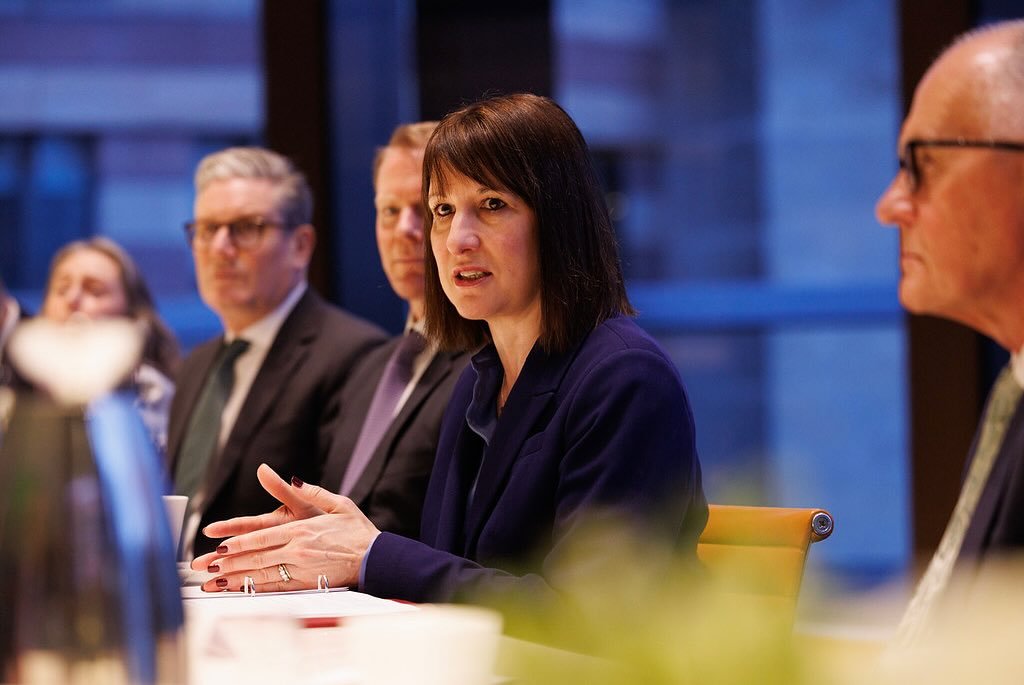
Chancellor Rachel Reeves found herself at the centre of Westminster drama this week as she was visibly seen wiping away tears during Prime Minister’s Questions, marking one of the most emotionally charged parliamentary sessions in recent memory. The dramatic scenes unfolded just hours after the biggest rebellion of Sir Keir Starmer’s premiership, leaving Rachel Reeves with a devastating £5 billion hole in her spending plans.
The historic significance of Rachel Reeves’ position cannot be understated. As Britain’s first female Chancellor of the Exchequer in over 800 years, she has broken through one of Westminster’s most enduring glass ceilings. Yet this groundbreaking achievement is now overshadowed by mounting political pressure and questions about her future in Number 11 Downing Street.
The Emotional Toll of Political Leadership
During Wednesday’s PMQs, Rachel Reeves appeared visibly distressed as Conservative leader Kemi Badenoch launched a fierce attack on her record. “She looks absolutely miserable,” Badenoch told the Commons, gesturing towards the Chancellor. The unprecedented scenes saw Rachel Reeves wiping away tears multiple times throughout the session, with her sister and fellow Labour MP Ellie Reeves appearing to comfort her as they left the chamber.
A spokesman for Rachel Reeves later confirmed the emotional display was due to a “personal matter” that they would not discuss publicly. However, sources have suggested the tears may have been linked to an alleged disagreement with Commons Speaker Sir Lindsay Hoyle prior to PMQs, though the Speaker’s office declined to comment.
The timing could hardly have been worse for Rachel Reeves. Just 24 hours earlier, she had witnessed the most damaging parliamentary rebellion of Starmer’s leadership, with 49 Labour MPs voting against the government’s welfare reforms. This represented the largest rebellion in a prime minister’s first year since Tony Blair faced similar opposition in 1997.
The Welfare Reforms Disaster
The welfare bill debacle has left Rachel Reeves in an impossible financial position. The original reforms were designed to save approximately £5.5 billion annually through tighter eligibility rules for Personal Independence Payments and cuts to Universal Credit. These savings were crucial for Rachel Reeves to meet her fiscal rules and maintain economic credibility.
However, faced with overwhelming opposition from her own backbenchers, the government was forced into a series of humiliating U-turns. The most controversial elements of the bill were either delayed until 2026 or shelved entirely pending a comprehensive review. The result is that Rachel Reeves now faces a black hole of around £5 billion in her spending plans, with experts warning this could force tax rises or spending cuts elsewhere.
Pat McFadden, Chancellor of the Duchy of Lancaster, admitted there would be “financial consequences” to the decision but insisted Rachel Reeves would “of course” still be Chancellor in six months’ time. This public show of support came after Sir Keir Starmer notably failed to guarantee Rachel Reeves’ position when directly challenged by Kemi Badenoch during PMQs.
A Trailblazing Career Under Scrutiny
Rachel Reeves’ journey to becoming Britain’s first female Chancellor began in Lewisham, south London, where she was born in February 1979. The daughter of two teachers, she excelled academically from an early age, becoming a national under-14 chess champion before studying Philosophy, Politics and Economics at Oxford University.
Her professional career took her through some of Britain’s most prestigious financial institutions. Rachel Reeves spent six years as an economist at the Bank of England, including a stint at the British Embassy in Washington where she met her future husband Nicholas Joicey. She later worked in senior roles at Halifax Bank of Scotland (HBOS), though her exact responsibilities there have recently come under scrutiny.
The path to Westminster began in 2010 when Rachel Reeves was elected as MP for Leeds West, becoming the first female MP to represent a Leeds constituency since Alice Bacon in the 1970s. Her rise through Labour’s ranks was swift, serving in various shadow ministerial roles before being appointed Shadow Chancellor in 2021.
Historic Firsts and Feminist Symbolism
When Rachel Reeves walked through the doors of Number 11 Downing Street in July 2024, she made history as the first woman to hold the Chancellor’s brief in its 800-year existence. The symbolic importance of this achievement extends far beyond Westminster, representing a breakthrough for women in the traditionally male-dominated world of economic policy-making.
Rachel Reeves has spoken passionately about using her position to champion women’s economic empowerment. She has committed to closing the gender pay gap, currently at 14.3%, and making flexible working arrangements the norm across British workplaces. Her 2023 book “The Women Who Made Modern Economics” highlighted her commitment to recognising female contributions to economic thought.
The Chancellor has drawn inspiration from pioneering Labour women including Barbara Castle, Harriet Harman, and Ellen Wilkinson, crediting them with showing her that high political office was achievable for women from comprehensive school backgrounds.
Personal Life and Family Dynamics
Rachel Reeves is married to Nicholas Joicey, a senior civil servant who previously served as speechwriter to Gordon Brown during his time as Chancellor. The couple has two children and maintains homes in both Leeds and London, reflecting Rachel Reeves’ dual role as constituency MP and national political figure.
The Reeves family has become something of a Westminster dynasty, with Rachel’s younger sister Ellie also serving as a Labour MP. Ellie Reeves currently represents Lewisham West and East Dulwich and holds the position of Labour Party Chair. The sisters have described their relationship as close, with Rachel admitting she was “more like a pushy parent” during their school years, even setting extra homework for Ellie.
This family bond was evident during the traumatic PMQs session, with observers noting how Ellie appeared to comfort her older sister as they left the Commons chamber together.
Economic Challenges and Policy Priorities
As Chancellor, Rachel Reeves has positioned economic growth as her primary mission, describing it as both Labour’s electoral promise and now a “national mission”. Her approach centres on what she terms “modern supply-side economics,” focusing on boosting productivity and labour supply while reducing inequality.
Key policy initiatives under Rachel Reeves’ leadership include the establishment of the National Wealth Fund, ambitious house-building targets of 1.5 million homes over five years, and significant infrastructure investment including £15 billion for transport projects in the North and Midlands. She has also championed the removal of restrictions on onshore wind development as part of Labour’s clean energy agenda.
However, Rachel Reeves’ tenure has been marked by controversial decisions that have drawn criticism from various quarters. Her decision to means-test winter fuel payments for pensioners sparked significant opposition, while her October 2024 budget introduced the largest tax rises since 1993. These measures, combined with the recent welfare reforms debacle, have contributed to Labour’s declining poll numbers and Rachel Reeves’ own approval ratings.
Questions About Experience and Credibility
Recent months have seen increased scrutiny of Rachel Reeves’ professional background, particularly her roles in the banking sector. Critics have questioned whether she overstated her experience as an economist at HBOS, with reports suggesting her actual role involved customer relations and mortgage retention rather than economic analysis. The BBC has also reported discrepancies in her LinkedIn profile regarding departure dates from both the Bank of England and HBOS.
These revelations have led to Rachel Reeves being dubbed “Rachel from accounts” by opposition politicians and media commentators, a nickname that has stuck despite her defenders arguing her roles were genuinely senior positions within major financial institutions.
Political Future Under Question
The events of this week have raised serious questions about Rachel Reeves’ political future. When directly asked by Kemi Badenoch whether she could guarantee the Chancellor’s position until the next election, Sir Keir Starmer notably failed to provide the assurance, instead offering only lukewarm praise for her record.
This represents a significant shift from January 2025, when Downing Street explicitly stated that Rachel Reeves would remain Chancellor “for the whole of this Parliament”. The Prime Minister’s failure to repeat this commitment has fuelled speculation about a potential reshuffle, particularly given the scale of the welfare rebellion and the financial hole it has created.
Political observers note that Rachel Reeves faces an almost impossible task in plugging the £5 billion shortfall without breaking Labour’s manifesto commitments or her own fiscal rules. Options include raising taxes, cutting spending elsewhere, or relaxing borrowing constraints – all politically toxic choices that could further damage the government’s credibility.
Despite these challenges, senior government figures continue to publicly back Rachel Reeves. Pat McFadden insisted she would remain in post, describing her as doing “an excellent job” and emphasising that the government takes decisions “as a team”. However, the very need for such public reassurances highlights the precarious nature of her position.
The Broader Context of Labour’s Struggles
Rachel Reeves’ difficulties reflect broader challenges facing the Starmer government after just over a year in office. Despite winning one of the largest parliamentary majorities in British history, Labour has struggled to maintain public confidence, with Sir Keir Starmer recording some of the lowest approval ratings for a newly elected Prime Minister in modern history.
The welfare rebellion represents more than just policy disagreement – it symbolises a fundamental tension within the Labour Party between fiscal responsibility and traditional social democratic values. Rachel Reeves, as the guardian of the government’s economic credibility, finds herself at the centre of this ideological battle.
The Chancellor’s tears during PMQs may have been attributed to personal matters, but they also serve as a powerful metaphor for the impossible pressures facing those charged with reconciling political idealism with economic reality. As Rachel Reeves contemplates her next moves, she does so knowing that her historic position as Britain’s first female Chancellor hangs in the balance, with her political survival dependent on navigating one of the most challenging periods in recent British politics.
The coming weeks will prove crucial for Rachel Reeves as she attempts to restore her authority and find solutions to the financial crisis created by the welfare U-turn. For a politician who has spent her career breaking barriers and defying expectations, the current crisis represents perhaps her greatest test yet – one that will determine not just her own future, but potentially the trajectory of the entire Labour government.