

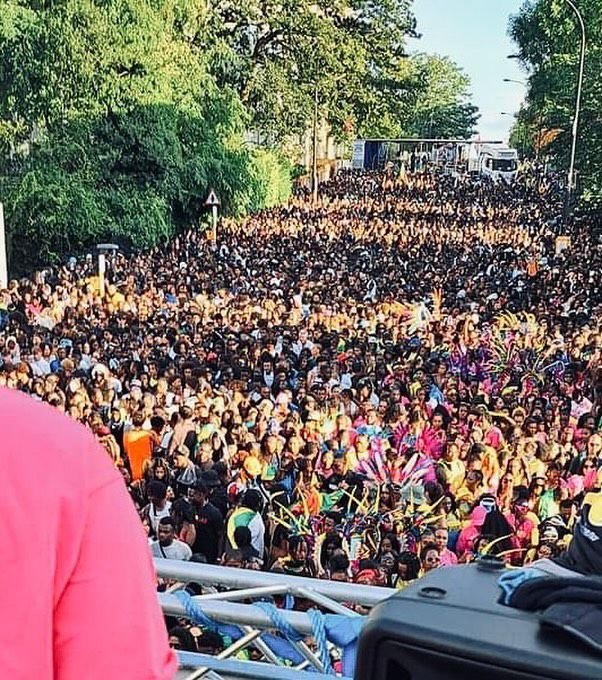
As summer reaches its peak, one of London’s defining spectacles approaches: Notting Hill Carnival. Stretching across the August Bank Holiday, this iconic street festival weaves together music, dance, history, and the spirit of Britain’s Caribbean communities. With record crowds expected and new safety measures introduced, 2025 promises a memorable yet responsible Carnival, reflecting the vibrancy and challenges of hosting Europe’s largest street event.
Carnival Dates and Things to Expect
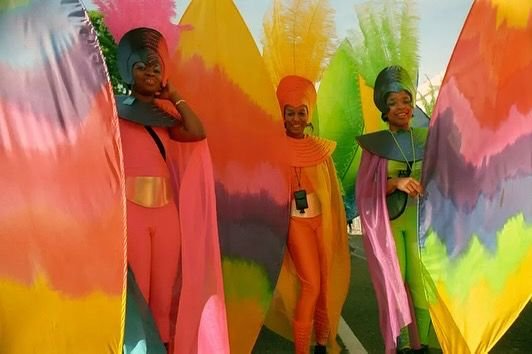
The Carnival festivities begin on Saturday, 23 August with the UK National Panorama Steel Band Competition, a pulsating showcase of steel orchestras vying for the national title at Emslie Horniman’s Pleasance Park. Sunday, 24 August, brings J’Ouvert and Children’s Day, where families enjoy a colourful parade featuring costumed children and blend into exuberant outdoor parties. On Monday, 25 August, the main parade takes centre stage with dancers, feathered costumes, dozens of sound systems, and food tents offering everything from Trinidadian roti to Jamaican jerk chicken. Entry is free, with only the Saturday band contest requiring tickets.
Each day transforms west London’s streets—including Ladbroke Grove, Portobello Road, and Kensal Road—into a sea of music and multicultural celebration from morning through early evening. The event merges the best of Caribbean heritage with London’s diverse identity, drawing an ever-broader audience and inspiring joy across generations.
Record-Breaking Crowds and Local Impact
Organisers and local authorities anticipate up to two million attendees in 2025—a record turnout, making Notting Hill Carnival not just the largest street festival in Europe but one of the world’s biggest outdoor events. Over 50,000 performers and more than 30 independent sound systems will bring the streets alive, supported by 300-plus food and drink stalls.
The festival generates immense economic benefit. Hotel prices in the area spike, with studies showing rates jump by 8.4% at the event’s start, reflecting demand far above the city average. Local businesses and seasonal staff see their busiest weekend of the year, and London’s hospitality sector receives a multimillion-pound boost, underscoring Carnival’s role in community wellbeing and city prosperity.
Safety First: Measures and Discussions
Carnival’s expanding scale brings complex safety requirements. Following expert reports and community feedback, 2025 introduces changes reflecting both opportunity and caution. Anti-terror barriers on Portobello Road—installed to prevent vehicle-related incidents—will be temporarily removed for Carnival week, enabling free movement yet preserving mechanisms to manage road closures. Temporary barriers will supplement crowd control and allow for emergency access when needed.
The Greater London Authority (GLA), Metropolitan Police, local councils, and Notting Hill Carnival Ltd have collaboratively reviewed plans, investing an extra £1million this year to strengthen security. Crowd management rules, sound system volume limits, enhanced steward training, and licensing of stalls selling alcohol all reinforce commitment to public safety. Police presence will increase, supported by improved communications and rapid response protocols.
Mayor Sadiq Khan and City Hall have prioritised continuous review of plans, mindful of past crowd-crush incidents and the risk posed by record attendance. Conservative leaders and police officers have advocated partial ticketing or relocation to Hyde Park if local infrastructure cannot accommodate future growth. These options remain part of ongoing discussions about Carnival’s trajectory.
Cultural Heritage: Community at the Core
The Carnival’s roots date back to 1959, originating in response to racial tensions and blossoming into a beacon of Caribbean resilience and unity. Today, the event is coordinated by a blend of volunteer groups, community organisations, and cultural leaders, supported by a vast logistics effort. It symbolises the friendships, creativity, and social bonds that fuel London’s evolution.
Traditional calypso, soca, reggae, and samba echo throughout the main parade alongside contemporary DJs and international artists. The participation of youth, local schools, and family groups keeps Carnival an authentic community affair, with children’s parades and dance workshops central to the event’s inclusive vibe.
Expert Insights and Official Statements
Police Federation officers continue to raise concerns about violence and alcohol-related incidents each year. Last year saw more than sixty assaults reported over the weekend, though officials stress that such numbers remain a small proportion of total attendance. Carnival Ltd and City Hall officials are committed to learning from these incidents, investing in lasting improvements and calling for national funding to guarantee the festival’s safe future.
Community leaders highlight the carnival’s progressive initiatives—such as the “R.E.S.P.E.C.T.” campaign to foster respect and inclusion, and partnerships with local charities like Elba Hope Foundation.
Getting There: Essential Travel Advice
Transport for London advises planning ahead, as road closures and congestion are inevitable. Arrive early to secure spaces, avoid closed stations in Notting Hill, and use alternatives such as Shepherd’s Bush or Paddington. Accessibility provisions for disabled patrons and families are expanded each year, with digital maps and stewards to guide attendees through the festival’s evolving footprint.
Looking Forward: The Carnival’s Place in London
Notting Hill Carnival remains the heartbeat of British multiculturalism—an enduring showcase of unity, resilience, and celebration. In 2025, it stands at a crossroads, with new policies, record crowds, and ongoing debates about safety and sustainability shaping its future. For Londoners and visitors alike, the Carnival is not just an event but a symbol of the city’s global character and capacity to inspire joy in the midst of challenge.
As another Carnival unfolds, West London invites the world to celebrate in its streets, echoing decades of tradition with every drum beat, dance move, and shared moment.
Read more: red devils vs trinity