

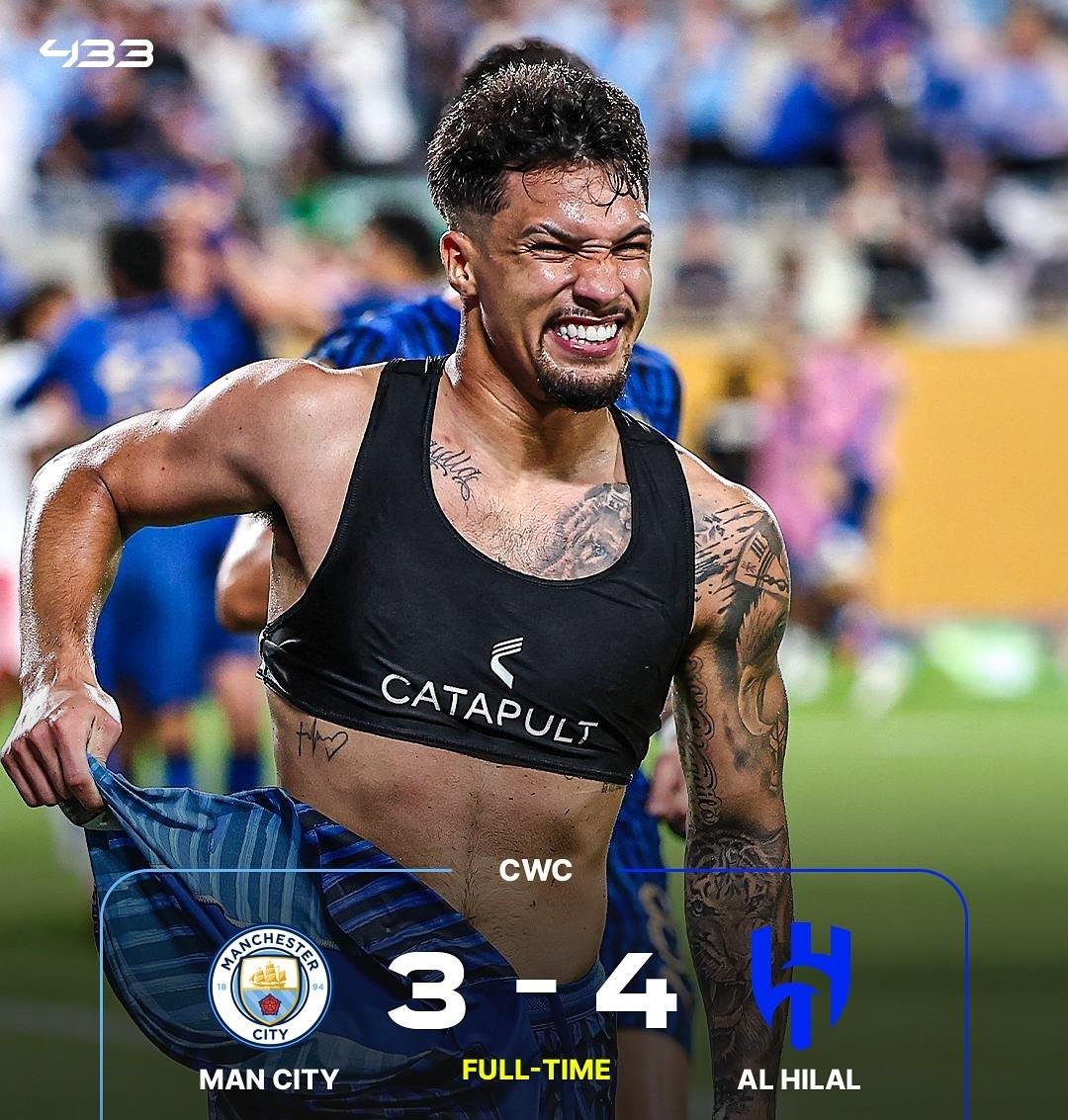
Manchester City’s dreams of lifting the FIFA Club World Cup were dashed in spectacular fashion as Saudi Arabian champions Al-Hilal secured a remarkable 4-3 victory (Man City vs Al-Hilal) in extra time at Orlando’s Camping World Stadium. The result sent shockwaves through the football world and marked one of the biggest upsets in the tournament’s expanded 32-team format.
The Match That Defied All Expectations
The encounter between Man City vs Al-Hilal began with promise for Pep Guardiola’s side, who took an early lead through Bernardo Silva in the ninth minute. However, what followed was a thrilling seven-goal encounter that showcased the unpredictable nature of football at its finest.
Brazilian striker Marcos Leonardo emerged as the hero for Al-Hilal, netting twice including the decisive winner in the 112th minute. The 25-year-old’s performance epitomised the Saudi side’s determination to compete with Europe’s elite, with his emotional celebration highlighting the magnitude of the achievement.
Pep Guardiola’s reaction to the defeat was one of disappointment mixed with philosophical acceptance. “It is a pity,” the City boss reflected. “We have been on an incredible journey together and were in a good place. The vibe was really good”. The Spanish tactician acknowledged his team’s shortcomings, particularly in managing transitions and clinical finishing.
Al-Hilal’s Tactical Masterclass Under Inzaghi
Simone Inzaghi, who joined Al-Hilal just weeks before the tournament on a reported €30 million per season contract, orchestrated a tactical masterpiece. The Italian’s decision to defend deep and hit City on the counter-attack proved devastatingly effective.
“We had to climb Mount Everest without oxygen,” Inzaghi said after the match, perfectly capturing the scale of the challenge his team faced. The former Inter Milan coach’s appointment proved inspired, as he became the first manager to guide a Saudi club past the defending champions.
The performance of goalkeeper Yassine Bounou was particularly crucial, with the Moroccan shot-stopper making a series of outstanding saves to keep City at bay. His heroics during the first half prevented City from extending their lead, keeping Al-Hilal within touching distance.
City’s Missed Opportunities Prove Costly
The Man City vs Al-Hilal encounter highlighted City’s wastefulness in front of goal, a trait that would ultimately cost them dearly. Despite dominating possession and creating numerous chances, City failed to put the game beyond Al-Hilal’s reach when they had the opportunity.
Erling Haaland’s equaliser in the 55th minute and Phil Foden’s extra-time strike that made him the 20th player to score 100 goals for City showed glimpses of their quality. However, City’s high defensive line was repeatedly exploited by Al-Hilal’s pacey forwards, particularly Malcom and Leonardo.
The match statistics tell the story of City’s profligacy. They created enough chances to score five or six goals, yet found themselves eliminated from a competition they desperately wanted to win. Bernardo Silva’s post-match comments summed up the frustration: “We lacked concentration and organisation when we lost the ball”.
Historic Achievement for Saudi Football
This victory represents more than just a football match for Al-Hilal and Saudi football as a whole. The club’s progression to the quarter-finals, where they will face Brazilian side Fluminense, ensures a non-European team will reach the semi-finals.
The achievement builds on Saudi Arabia’s growing football reputation, following their stunning 2-1 victory over eventual World Cup winners Argentina at Qatar 2022. Al-Hilal’s success in the Man City vs Al-Hilal clash demonstrates the rapid development of Saudi football, fuelled by significant investment and the attraction of world-class talent.
The 42,311 attendance at Camping World Stadium witnessed history in the making. For many Saudi supporters present, this was vindication of their league’s quality and a moment that will be remembered for generations.
The Financial and Sporting Implications
City’s early exit carries significant financial consequences, with the club missing out on potential prize money that could have reached $13.7 million for quarter-final qualification. More importantly, the defeat represents a missed opportunity to claim a trophy that would have perfectly complemented their recent Premier League and Champions League successes.
The expanded Club World Cup format, featuring 32 teams for the first time, was designed to increase competitiveness and global interest. Al-Hilal’s triumph over City validates FIFA’s decision to broaden the tournament’s scope, proving that clubs from Asia and the Middle East can compete with Europe’s finest.
What This Means for Both Clubs
For Al-Hilal, the victory opens up realistic possibilities of reaching the final. Their quarter-final opponents, Fluminense, represent another significant challenge, but Inzaghi’s side will approach the match with supreme confidence.
City, meanwhile, face a period of reflection. Guardiola emphasised the need for rest and mental refreshment ahead of the new Premier League season, which begins in August. The defeat serves as a reminder that even the best teams can be vulnerable when they fail to take their chances.
The Man City vs Al-Hilal result will be remembered as a watershed moment in Asian club football. It proved that with the right preparation, tactics, and self-belief, any team can triumph on football’s biggest stage. For Al-Hilal, this victory represents the pinnacle of their ambitions. For City, it’s a painful lesson in the unpredictable nature of knockout football.
As the Club World Cup continues in the United States, Al-Hilal’s remarkable achievement has already ensured this tournament will be remembered for all the right reasons. Their stunning victory over the defending champions has elevated the competition’s profile and demonstrated that football’s global balance of power continues to shift in fascinating ways.
Read More: Ronaldo New Contract: Al Nassr Deal Worth €185M Per Year