

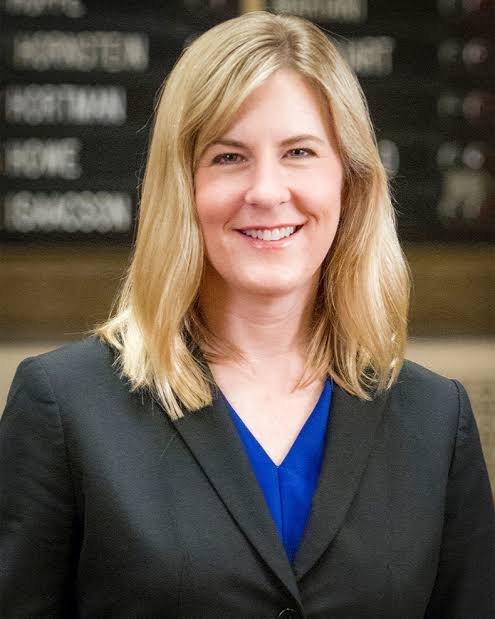
Brooklyn Park, MN – June 15, 2025 – Minnesota is reeling today after a shocking and “politically motivated” attack claimed the life of House Speaker Emerita Melissa Hortman, 55, and her husband, Mark Hortman, 58, in their Brooklyn Park home early Saturday morning. In a related incident, State Senator John Hoffman, 60, and his wife, Yvette Hoffman, were also shot at their Champlin residence but are expected to survive after undergoing surgery.
Governor Tim Walz swiftly condemned the violence, describing the deaths of Melissa and Mark Hortman as a “political assassination” and ordering flags to fly at half-staff in their honor.
Authorities have identified 57-year-old Vance Luther Boelter as the primary suspect in the coordinated attacks. A massive manhunt is currently underway across the state, involving hundreds of law enforcement officers from various agencies, including the FBI. The FBI has offered a reward of up to $50,000 for information leading to Boelter’s arrest and conviction, urging the public to consider him armed and dangerous.
A Chilling Impersonation
The brazen attacks unfolded in the early hours of Saturday. Champlin police first responded to a call at Senator Hoffman’s home around 2:00 a.m., finding the couple with multiple gunshot wounds. Proactive checks by police on other lawmakers then led Brooklyn Park officers to the Hortmans’ residence at approximately 3:35 a.m.
There, officers encountered a chilling scene: what appeared to be a police SUV with emergency lights on was parked in the driveway, and a man dressed in a full police uniform, including a tactical vest, badge, and other equipment, was seen leaving the house. When confronted by officers, the individual, later identified as Boelter, “immediately fired upon the officers,” according to Brooklyn Park Police Chief Mark Bruley. Boelter then retreated back into the home before escaping on foot through the back.
Inside the Hortman residence, police found Mark Hortman, who had been fatally shot. Despite immediate first aid, he was pronounced dead. A drone search subsequently located Melissa Hortman deceased inside the home. Chief Bruley stated that Boelter had “clearly” impersonated a police officer, exploiting “the trust of this badge and this uniform to manipulate their way into the home.”
Targeted Violence and a “Manifesto”
The motive behind the shootings appears to be deeply rooted in political extremism. Investigators discovered a “manifesto” in Boelter’s vehicle, which reportedly contained an extensive list of over 50 potential targets, including other lawmakers, officials, and prominent abortion rights advocates and facilities. Both Melissa Hortman and John Hoffman were explicitly named on this list. Flyers referencing the “No Kings” movement, an anti-government group, were also found in the suspect’s car.
Governor Walz emphasized the need to stand united against all forms of political violence. “Peaceful discourse is the foundation of our democracy. We don’t settle our differences with violence or at gunpoint,” he stated.
Remembering a Dedicated Public Servant
Melissa Hortman, a Democrat, was a long-serving and respected figure in Minnesota politics. Elected in 2004, she represented District 34B and served 11 terms in the Minnesota House of Representatives, including a significant tenure as Speaker from 2019-2024. Her colleagues and leaders from across the political spectrum have expressed profound grief and offered tributes, remembering her as a formidable and compassionate public servant dedicated to improving the lives of Minnesotans. U.S. Senator Amy Klobuchar remembered Hortman as a “good friend” who leaves behind an enduring legacy after fighting for initiatives like free school lunches, women’s rights, and clean energy.
Senator John Hoffman and his wife, Yvette, are currently recovering from their serious injuries. Hoffman, a Democrat representing District 34, and Boelter had some overlap, having both served on the same state workforce development board, though the nature of their relationship, if any, is unclear.
Key Individuals and Their Status
| Name | Role/Relationship | Status | Key Detail |
| Melissa Hortman | Former House Speaker (DFL) | Killed | 55 years old, Died at home in Brooklyn Park |
| Mark Hortman | Husband of Melissa Hortman | Killed | 58 years old, Died at North Memorial Hospital |
| Senator John Hoffman | State Senator (DFL) | Injured (Stable) | 60 years old, Shot at Champlin home, Underwent surgery |
| Yvette Hoffman | Wife of Senator John Hoffman | Injured (Stable) | Shot at Champlin home, Underwent surgery |
| Vance Luther Boelter | Suspect | At Large (Armed & Dangerous) | 57 years old, Manhunt underway, FBI reward offered |
| Governor Tim Walz | Governor of Minnesota | Official Statement/Condemnation | Declared attack “politically motivated assassination” |
| Mark Bruley | Brooklyn Park Police Chief | Official Statement/Investigation Lead | Provided details on suspect’s impersonation and escape |
| Drew Evans | MN Bureau of Criminal Apprehension Superintendent | Official Statement/Investigation Lead | Provided updates on investigation and suspect identification |
III. The Suspect and Alleged Motives
Vance Luther Boelter: A Manhunt Underway
Authorities have identified Vance Luther Boelter, 57, of Green Isle, Minnesota, as the primary suspect in the shootings. A massive search involving hundreds of law enforcement officers, backed by the FBI, is underway, with a reward of up to $50,000 offered for information leading to his arrest and conviction. Boelter is described as a white man, 6 ft. 1 in. tall, weighing 220 lb., and was last seen wearing a light-colored cowboy hat, a dark long-sleeve collared shirt or coat, light pants, and carrying a dark bag. He is considered “armed and dangerous,” believed to still possess a pistol, with AK-style firearms recovered from his abandoned vehicle.
Boelter was a former political appointee, having served on the same bipartisan workforce development board as Senator John Hoffman, appointed by Governors Mark Dayton and Tim Walz, with his term expiring in 2023. While there was “certainly some overlap with some public meetings” between Hoffman and Boelter, investigators have not determined the nature of their relationship or if they actually knew each other. Online postings reviewed by Reuters linked Boelter to evangelical ministries and claims of security expert experience in the Gaza Strip and Africa, alongside past employment in food service companies.
After the confrontation with police at the Melissa Hortman home, Boelter fled on foot. He briefly returned to a rented room in Minneapolis around 6 a.m., where he texted two roommates, stating he had “made some bad choices” and that he “may be dead soon,” suggesting a desperate state of mind. Surveillance cameras at this location captured the image of Boelter in a cowboy hat that authorities later released to the public. These text messages provide a rare glimpse into his psychological state post-crime. This communication, coupled with his flight on foot and being considered “armed and dangerous,” suggests a perpetrator who may be desperate, potentially suicidal, and willing to engage in further violence rather than surrender. A suspect who believes they “may be dead soon” might be less inclined to surrender peacefully, which could lead to a more violent confrontation with law enforcement, potentially a “suicide by cop” scenario, or a desperate attempt to evade capture at all costs. This significantly increases the risk for the hundreds of officers involved in the search. This behavior aligns with patterns observed in other perpetrators of ideologically motivated violence, where the act itself might be seen as a final, self-destructive statement.
Evidence of Politically Motivated Violence
Governor Walz’s declaration of the attack as “politically motivated” is strongly supported by evidence found in Boelter’s abandoned vehicle. Inside the fake police SUV, authorities discovered a “manifesto” and an “extensive list of possible targets,” naming more than 50 individuals, including other lawmakers, officials beyond Minnesota, abortion rights advocates, and abortion facilities. An anonymous Minnesota official told The Associated Press that the suspect’s writings specifically contained information targeting prominent lawmakers outspoken in favor of abortion rights.
The vehicle also contained “No Kings” flyers. While police stated there were “no direct links” found between the writings and the nationwide “No Kings” protests, the presence of these flyers prompted the Minnesota State Patrol to urge the public not to attend planned demonstrations “out of an abundance of caution”. Organizers of the “No Kings” coalition subsequently canceled all protests in the state, though some crowds still gathered.
IV. The Unfolding Investigation and Public Safety
The investigation quickly escalated into a multi-agency effort involving the Minnesota Bureau of Criminal Apprehension (BCA), the FBI, local police departments (Champlin, Brooklyn Park, Minneapolis), the ATF, and the U.S. Marshals Service. Hundreds of officers are involved in the extensive manhunt for Boelter, who is believed to have fled on foot and is considered armed and dangerous.
In response to the unfolding crisis, authorities issued public safety alerts, including shelter-in-place orders in Brooklyn Park. The Minnesota State Patrol, citing the “targeted shootings of state lawmakers,” urged the public to avoid planned “No Kings” demonstrations, leading organizers to cancel all such protests in the state. Warnings were also reportedly issued to other state elected officials. The immediate issuance of shelter-in-place orders and the cancellation of public protests demonstrate the profound and immediate impact of this targeted violence on public life and freedom of assembly. The warnings to other lawmakers highlight the perceived widespread threat.
These measures, while necessary, represent a curtailment of civil liberties, such as freedom of movement and assembly. The fact that protests were canceled due to fear of violence, despite initial statements of no direct links between the suspect’s writings and the protests themselves, suggests that the attack created a pervasive climate of fear that impacted democratic expression. This targeted political violence caused authorities to implement these widespread public safety measures, which in turn resulted in the disruption of daily life, political gatherings, and a chilling effect on public discourse. The discovery of a target list further justified these warnings, creating a legitimate fear among other officials. This incident demonstrates how acts of political violence can have far-reaching consequences beyond the immediate victims, impacting the fundamental rights and activities of a democratic society. It forces a difficult trade-off between public safety and civil liberties, and highlights how such attacks can undermine the very fabric of open political engagement by fostering fear and insecurity.
Timeline of Events (Key Milestones)
| Time (Approx.) | Event | Detail |
| 2:00 a.m. Saturday, June 14 | Hoffman shooting reported | Champlin police respond to 911 call; Hoffmans found with gunshot wounds |
| 3:35 a.m. | Police arrive at Hortman home; confront suspect | Brooklyn Park police proactively check home; encounter suspect impersonating officer |
| Immediate Confrontation | Exchange of gunfire; suspect escapes | Suspect fires on officers, retreats into home, flees on foot |
| Post-Confrontation | Discovery of victims | Melissa Hortman and Mark Hortman found inside home; pronounced dead |
| Post-Confrontation | Vehicle search and evidence | Suspect’s abandoned SUV yields “manifesto,” target list, “No Kings” flyers, AK-style firearms |
| 5:30 a.m. | Shelter-in-place issued | Brooklyn Park Police Department issues alert for 3-mile radius |
| 6:00 a.m. | Suspect texts roommates | Vance Boelter briefly returns to Minneapolis room; sends desperate texts |
| 9:45 a.m. | Gov. Walz announces Hortmans’ deaths | Press conference; declares attack “politically motivated” |
| 11:00 a.m. | Public urged to avoid rallies | Authorities and Gov. Walz advise against political gatherings |
| 3:00 p.m. | Boelter named suspect | Authorities officially identify Vance Boelter as primary suspect |
| 3:20 p.m. | Shelter-in-place lifted | Brooklyn Park lifts order; police activity continues |
| 3:50 p.m. | Hortmans’ cause of death confirmed | Hennepin County Medical Examiner releases initial reports |
| 4:00 p.m. | FBI reward announced | FBI offers $50,000 for information leading to Boelter’s arrest |
V. Widespread Condemnation and Broader Implications
The attacks drew immediate and widespread condemnation from across the political spectrum, both within Minnesota and nationally. Governor Tim Walz emphasized, “We don’t settle our differences with violence or at gunpoint,” and called on everyone to “stand united against all forms of violence”. President Donald Trump, in a statement, called the situation “horrific violence” that “will not be tolerated in the United States of America”. Senate Majority Leader Chuck Schumer urged a confrontation of “the toxic forces radicalizing individuals”. The bipartisan Minnesota delegation released a joint statement expressing “outrage, grief, and condemnation of this horrible attack on public servants,” asserting, “There is no place in our democracy for politically-motivated violence”.
The shootings occurred amidst a backdrop of increasing political polarization and a documented rise in politically motivated violence across the United States. This incident joins other high-profile events, such as the 2024 assassination attempt of President Donald Trump and the 2020 planned kidnapping of Michigan Governor Gretchen Whitmer, as stark examples of this alarming trend. Minnesota, traditionally known for its “Minnesota nice” politics, has also experienced heightened partisan tensions in recent years, particularly following the Democrats’ enactment of a sweeping liberal agenda in 2023 and 2024. The attacks directly contradict Minnesota’s long-standing reputation for political civility, highlighting how even states with a history of peaceful discourse are now experiencing the severe consequences of national political polarization.
The increasing national political polarization and radicalization have caused this type of violence to manifest even in a state like Minnesota, which historically prided itself on civility. The effect is the erosion of the “Minnesota nice” political culture, demonstrating that no state is immune to the consequences of escalating national tensions. This incident serves as a grim warning that the breakdown of civil political discourse is no longer an abstract concept but has tangible, lethal consequences. It underscores the urgent need for a societal reckoning with political extremism and a collective commitment to de-escalate rhetoric, as the failure to do so directly threatens the safety of public servants and the foundational principles of American democracy.
VI. Moving Forward: Calls for Unity and Justice
As the manhunt for Vance Boelter continues, law enforcement agencies have pledged to “spare no resource in bringing those responsible to justice”. The FBI’s significant reward underscores the urgency and national priority of his apprehension. The investigation by the Bureau of Criminal Apprehension is actively underway, with federal agencies like the ATF and U.S. Marshals deployed to assist.
The assassinations have left a deep void in the state legislature and a profound sense of grief and shock across Minnesota. Leaders have called for unity and a renewed commitment to peaceful discourse, emphasizing that “peaceful disagreement” and “civil public debate” are the cornerstones of their democracy. The bipartisan outpouring of mourning for Hortman and support for the Hoffmans demonstrates a temporary unity in the face of tragedy, even amidst deep legislative divisions. The attack serves as a somber reminder of the sacrifices made by public servants and the escalating risks they face in an increasingly volatile political climate.
Conclusion
The targeted killings of Melissa Hortman and her husband, and the attempted assassinations of Senator John Hoffman and his wife, represent a grave challenge to the democratic norms of Minnesota and the United States. The evidence points to a politically motivated act, driven by extreme ideological opposition to legislative actions, particularly those championed by Hortman regarding abortion rights. The suspect’s calculated impersonation of a police officer highlights a chilling level of premeditation and a willingness to exploit public trust to achieve violent ends.
This tragedy underscores a dangerous escalation in political violence, moving beyond rhetoric to direct, lethal attacks on elected officials. The immediate societal impact, including public safety alerts and the cancellation of demonstrations, demonstrates how such acts can disrupt daily life and curtail fundamental freedoms, fostering a climate of fear that undermines democratic participation. Governor Walz’s strong statements about not settling differences “at gunpoint” and the bipartisan calls to “reject political violence in all its forms” highlight a fundamental challenge to democratic norms. The act of targeting elected officials for their policy positions directly undermines the ability of representatives to serve freely and without fear, striking at the very foundation of peaceful governance.
This politically motivated assassination causes a direct threat to the integrity and functioning of the democratic process, resulting in a chilling effect on political participation, debate, and the willingness of individuals to enter public service, as the personal risks become unacceptably high. This incident serves as a stark and urgent reminder that democratic institutions are fragile and require constant vigilance against extremism and violence. It necessitates a national conversation about the boundaries of political discourse and the collective responsibility to uphold norms of civility and peaceful disagreement to preserve the foundational values of American governance. As the manhunt for Vance Boelter continues, the focus remains on bringing him to justice and confronting the underlying forces that fuel such horrific violence, in an effort to reaffirm the principles of peaceful disagreement and democratic integrity.