


A New Missile Reality in Europe
British headlines and search trends are brimming with concern over Russia’s growing missile ambitions. As of August 2025, the Kremlin has officially withdrawn from its self-imposed restrictions on deploying intermediate-range missiles, shaking up security calculations across Europe. This follows Russia’s decision to stop honouring the Intermediate-Range Nuclear Forces (INF) Treaty, a Cold War pact that once banned land-based missiles with a range of 500 to 5,500km. The UK government and experts warn that this step increases the risk of a new missile arms race, with Britain potentially in the crosshairs.
What Led to the Shift?
Russia’s move comes in response to what it claims is a growing Western missile threat near its borders. Moscow argues that the deployment of advanced US missile systems—such as Typhoon and Dark Eagle—in Germany and beyond creates “direct threats” to Russian security. Kremlin officials say their actions are a reaction to these changes, not an escalation. However, analysts point out that this shift removes an important layer of stability from European security architecture, making the deployment of Russian missiles in Belarus or western Russia a real possibility.
The Oreshnik Missile and New Russian Capabilities
A focal point of concern is Russia’s new “Oreshnik” intermediate-range ballistic missile, capable of carrying either conventional or nuclear warheads and touted to reach all of Europe, including the UK. President Vladimir Putin announced in August 2025 that the Oreshnik has entered service, with some units already stationed in Russia and plans underway to deploy them in Belarus by the end of the year. The missile can reportedly travel at speeds of up to Mach 10, making interception extremely difficult, and has already been used in at least one strike against Ukraine.
UK Defence experts worry that the range of these systems, estimated at more than 2,500km, would put major British cities and military facilities under direct threat. The British government regards this capability as a substantial risk to the nation’s security.
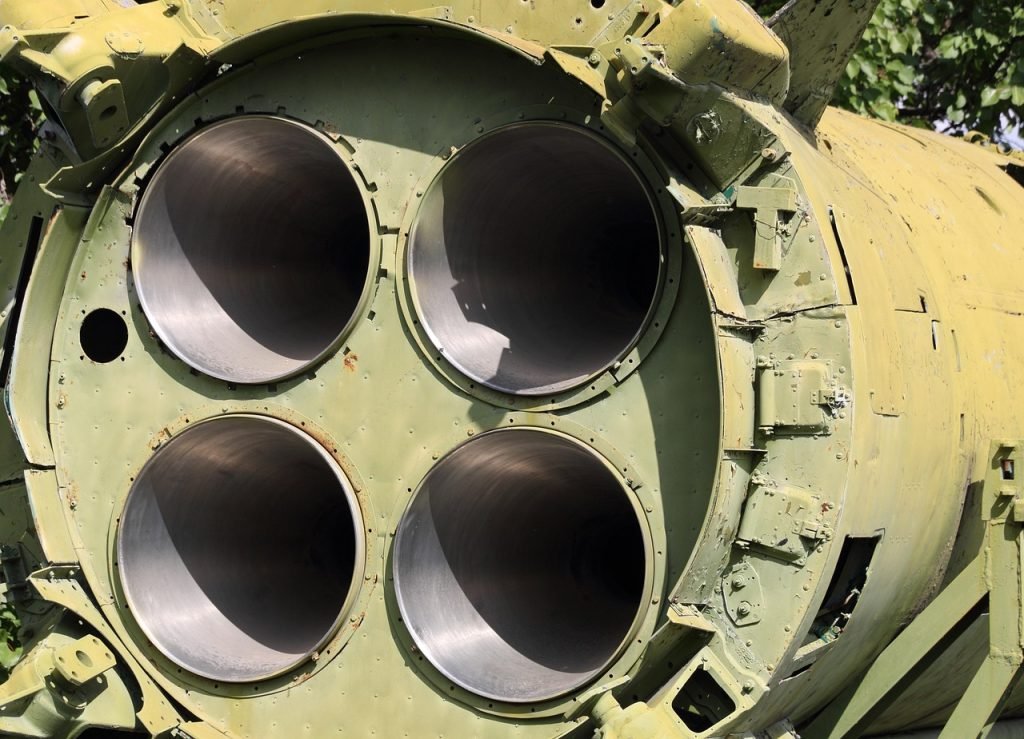
The Bulava Missile: A Critical Underwater Asset
A central component of Russia’s submarine-based arsenal is the RSM-56 Bulava—a modern submarine-launched ballistic missile (SLBM) developed for the formidable Borei-class submarines. The Bulava entered service in 2019 and can carry multiple independently targeted nuclear warheads, reaching targets up to 9,500km away. Borei-class submarines each carry 16 Bulava missiles, positioning them as an enduring threat until at least 2040.
What sets the Bulava apart is not only its range and payload but its ability to evade missile defences. Its three-stage design employs both solid and liquid fuels, allowing for evasive manoeuvres during flight and warhead separation. Such features force Western military planners to consider a “second-strike” capability that is nearly impossible to counter fully.
Missile Attacks in Ukraine: A Cautionary Tale
The human cost of Russian missile technology is most evident in Ukraine. Over the last week alone, Russia has launched missile and drone attacks on Ukrainian cities at an intensity even higher than at any previous stage of the war. According to UK representatives at the United Nations, these barrages have killed dozens of civilians, including children, and injured hundreds more. British officials are using these events to highlight the need for international resolve against Russian aggression and to justify providing Ukraine with further missile defences.
UK Government Response and Preparedness
The UK’s response has been robust and multi-layered. In June, the government announced a new wave of military support for Ukraine, including hundreds of advanced ground-to-air missiles funded by seized Russian assets and the wider Euro-Atlantic community. Defence Secretary John Healey confirmed that investment in anti-missile technology is a top priority, with £1.5billion pledged for new munitions factories and 7,000 new long-range British-made weapons in the procurement pipeline.
Recent government reviews have revealed, however, that UK missile stockpiles and defences are not currently sufficient to counter a large-scale Russian attack. Plans are underway to build more resilience, with new bases, drones, cyber protection, and “whole of society” initiatives such as an expanded cadet force.
Expert Insights and Public Perspective
Security analysts explain that the combination of Russia’s new missiles and its increasingly aggressive doctrine creates an era where the threats to UK infrastructure and people cannot be ignored. The British public is being encouraged to support increased defence spending and to remain cautious about disinformation and cyberattacks—a multifaceted threat environment shaped by both missile technology and hybrid tactics.
Amid these warnings, experts insist that while the risk of open conflict remains low, the UK must be ready for a range of scenarios, from missile attacks on military bases to economic and information warfare.
Conclusion: A Defining Moment for UK Security
The latest developments in Russian missile policy, from scrapping treaty limitations to rolling out new hypersonic systems, have made missile defence a central topic in British security debates. While the government’s pledges to boost air defences and support Ukraine provide some reassurance, questions remain about whether current plans go far enough. For now, the issue remains high on the public agenda, as politicians, experts, and citizens grapple with a new European security landscape—one where missiles, deterrence, and resilience once again take centre stage.
Read more: chikungunya virus china