

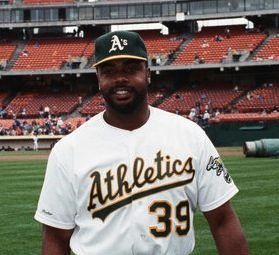
Baseball legend Dave Parker, affectionately known as “the Cobra,” has died at the age of 74 after a courageous battle with Parkinson’s disease. The Pittsburgh Pirates announced his passing on Saturday, just one month before his scheduled induction into the Baseball Hall of Fame in Cooperstown.
A Career That Defined Excellence
Dave Parker’s remarkable 19-season career in Major League Baseball from 1973 to 1991 established him as one of the sport’s most formidable five-tool players. Standing 6-foot-5 and possessing a powerful throwing arm that earned him his nickname, Parker compiled impressive statistics that eventually secured his place in baseball’s most exclusive club.
The towering outfielder finished his career with a .290 batting average, 339 home runs, and 1,493 RBIs across 2,712 hits. His defensive prowess was equally impressive, with Parker throwing out 72 runners from right field between 1975 and 1979, including a remarkable 26 in 1977 alone.
From Rising Star to World Champion
Parker spent 11 of his 19 major league seasons with the Pittsburgh Pirates, where he achieved his greatest individual accolades. He won back-to-back National League batting titles in 1977 (.338 average) and 1978 (.334 average), with the latter season earning him the National League Most Valuable Player award.
The 1978 MVP campaign saw Parker lead the National League with his .334 batting average whilst hitting 30 home runs and driving in 117 runs, despite suffering a fractured jaw and cheekbone in a collision at home plate during a match against the New York Mets. His determination to continue playing whilst wearing a specially constructed facemask exemplified the grit that defined his career.
The pinnacle of Parker’s Pittsburgh tenure came in 1979 when the Pirates captured the World Series championship. The team, famously known for adopting Sister Sledge’s “We Are Family” as their anthem, overcame a 3-1 series deficit against the Baltimore Orioles to claim the title. Parker played a crucial role in the championship run, batting .345 in the World Series.
The Million-Dollar Pioneer
Before the 1979 season, Parker became baseball’s first player to sign a contract averaging one million dollars per year. The five-year, $5 million deal with deferred payments represented a watershed moment in professional sports contracts. However, the label as a “million-dollar man” in blue-collar Pittsburgh created unrealistic expectations and eventually contributed to fan backlash during the team’s subsequent struggles.
Career Renaissance and Championships
After leaving Pittsburgh following the 1983 season, Parker experienced a career revival with his hometown Cincinnati Reds. His 1985 season ranks amongst his finest, as he led the National League with 125 RBIs, 42 doubles, and 340 total bases whilst finishing second in MVP voting.
Parker’s career received another boost when he joined the Oakland Athletics in 1988, where he helped the team win the 1989 World Series as a designated hitter. This championship came exactly 10 years after his first World Series triumph with Pittsburgh.
The Cobra’s Legendary Arm
Perhaps no single moment better captured Parker’s defensive brilliance than his performance in the 1979 All-Star Game at the Seattle Kingdome. Parker threw out two runners on the basepaths, including a spectacular throw from right field to home plate that nailed Brian Downing at the plate. The highlight-reel play earned him All-Star Game MVP honours and became a signature moment that defined his career.
Battle with Parkinson’s Disease
Dave Parker was diagnosed with Parkinson’s disease in 2012, beginning a 13-year battle with the degenerative neurological condition. Despite the challenges posed by the disease, Parker maintained his characteristic determination. “I’m a battler,” he said in 2018, reflecting the spirit that carried him through both triumph and adversity.
The disease gradually reduced Parker’s public appearances over the past decade, but he received tremendous joy when learning of his Hall of Fame election in December 2024. Along with fellow Pennsylvania legend Dick Allen, Parker was selected by the Classic Baseball Era Committee after years of falling short in traditional voting.
Hall of Fame Recognition Long Overdue
Parker’s path to Cooperstown was notably challenging. Despite his impressive career achievements, he received a maximum of only 24.5% support during his 15 years on the Baseball Writers’ Association of America ballot, well short of the required 75% threshold. His involvement in baseball’s cocaine scandals of the 1980s and the Pittsburgh drug trials likely contributed to voters’ reluctance to support his candidacy.
However, the Classic Baseball Era Committee recognised Parker’s on-field excellence, voting him into the Hall of Fame alongside Dick Allen in December 2024. The induction ceremony, scheduled for July 27 in Cooperstown, will now serve as a posthumous honour for both men.
A Legacy of Excellence
Throughout his career, Dave Parker earned seven All-Star selections, three Gold Glove Awards, and three Silver Slugger Awards. His combination of power, speed, and defensive ability made him one of baseball’s most complete players during his prime years in the mid-to-late 1970s.
Jane Forbes Clark, Chairman of the National Baseball Hall of Fame and Museum, captured Parker’s impact perfectly: “His legacy will be one of courage and leadership, matched only by his outstanding accomplishments on the field. His election to the Hall of Fame in December brought great joy to him, his family and all the fans who marvelled at his remarkable abilities”.
Dave Parker’s story represents both the triumph and tragedy inherent in professional sport. From his humble beginnings as a 14th-round draft pick in 1970 to becoming one of baseball’s most feared hitters, Parker’s journey embodied the American dream. Though Parkinson’s disease ultimately claimed his life just weeks before his Hall of Fame induction, his legacy as “the Cobra” will endure in Cooperstown forever.
The baseball world has lost not just a talented player, but a true competitor who exemplified excellence during an era when the sport captured the nation’s imagination. Dave Parker’s final at-bat may have come in 1991, but his impact on baseball will resonate for generations to come.
Read More: Hannah Onslow Net Worth: This City Is Ours Star’s Wealth