

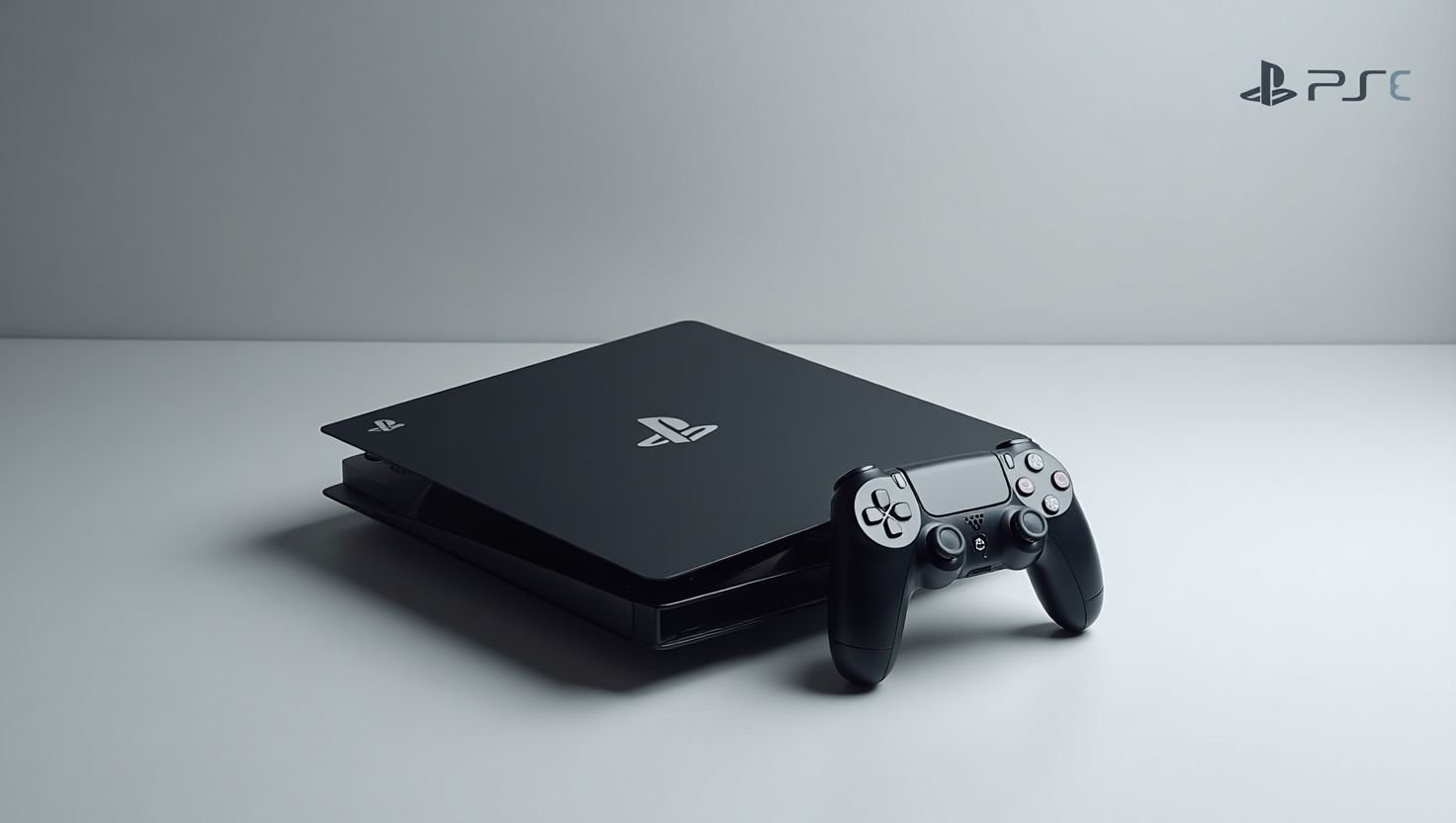
In the ever-evolving landscape of gaming consoles, Sony’s PlayStation has consistently pushed boundaries with each new iteration. As the PlayStation 5 approaches its fifth anniversary since its 2020 launch, anticipation is building for Sony’s next flagship console—the PlayStation 6. While Sony has been characteristically tight-lipped about specific details, recent developments and industry insights have provided a glimpse into what gamers can expect from the PS6. This comprehensive article explores the latest information available about the PlayStation 6, from its potential release date to its groundbreaking features.
Release Timeline: When Can We Expect the PS6?
Sony has recently confirmed that the PlayStation 6 is indeed “top of mind” for the company. During a June 13, 2025 Fireside Chat, Sony Interactive Entertainment CEO Hideaki Nishino acknowledged the significant interest in their next-generation console strategy, marking the first official confirmation of the PS6’s development.
Based on Sony’s historical release patterns, the PlayStation 6 is expected to launch between 2026 and 2028. Each previous PlayStation generation has typically enjoyed a 6-7 year lifecycle:
- PlayStation 3: Released in 2006
- PlayStation 4: Released in 2013
- PlayStation 5: Released in 2020
Following this pattern, 2026 or 2027 appears to be the most likely timeframe for the PS6 launch. This timeline aligns with recent industry reports suggesting that the PS6’s system-on-chip (SoC) design was completed in early 2025, with the console now in the validation phase.
Former Sony executive Shuhei Yoshida has hinted at a potential 2028 release, noting that both Sony and Microsoft might be targeting similar launch windows for their next-generation consoles. This would represent a slightly longer cycle than previous generations, potentially allowing Sony to maximise the market impact of the PS5 Pro, which was released in November 2024.
Hardware Specifications:
Processing Power
The PlayStation 6 is expected to feature significant hardware upgrades over its predecessor. According to industry reports, Sony will continue its partnership with AMD for the PS6’s chipset, a decision that was reportedly made as early as 2022.
The PS6 is rumoured to utilise a custom AMD Zen 6 CPU architecture, representing a substantial leap over the Zen 2 architecture found in both the PS5 and PS5 Pro. This next-generation CPU should significantly reduce the bottleneck issues experienced with some demanding PS5 titles.
For graphics processing, the PS6 is expected to leverage AMD’s next-generation UDNA GPU architecture (the successor to the current RDNA series). This advanced GPU should deliver substantial improvements in rasterisation capabilities and ray tracing performance.
Memory and Storage
Storage capacity has been a consistent concern for PS5 owners, with the current console offering approximately 667GB of usable space. The PS6 is expected to address this limitation with a significantly larger SSD, with most analysts predicting a minimum of 2TB of storage.
Some industry insiders suggest the PS6 could support storage expansion of up to 8TB through compatible M.2 SSDs, similar to the current PS5 but with greater capacity options. This expanded storage would help accommodate the increasingly large file sizes of modern AAA games.
Regarding system memory, the PS6 is rumoured to feature either 16GB or 32GB of GDDR6 RAM, potentially doubling the 16GB found in the PS5. Some reports even suggest the possibility of GDDR7 memory, which would offer improved bandwidth and power efficiency.
Visual Capabilities: A New Era of Immersion
Resolution and Frame Rates
The PS6 is expected to push the boundaries of visual fidelity with support for true 4K gaming at 120 frames per second and 8K resolution at 60 frames per second. This represents a significant upgrade over the PS5, which often requires compromises between resolution and performance.
Ray Tracing and Path Tracing
Advanced lighting technologies will be a major focus for the PS6. The console is expected to feature significantly improved ray tracing capabilities, building upon the foundation established with the PS5. Some reports suggest the PS6 might even support path tracing, an even more advanced rendering technique.
PSSR Technology
The PlayStation 6 is likely to incorporate an enhanced version of the PlayStation Spectral Super Resolution (PSSR) technology introduced with the PS5 Pro. This AI-powered upscaling technology allows games to render at lower resolutions and then be intelligently upscaled to 4K or 8K.
PSSR 2.0 on the PS6 could potentially enable true 4K gaming at 120FPS and 8K at 60FPS, representing a significant leap in performance over current-generation capabilities.
Design and User Experience
Console Design
While specific details about the PS6’s physical design remain scarce, some industry analysts speculate that Sony might move away from the distinctive curved white panels of the PS5 in favour of a more traditional, possibly more compact form factor.
A recent leaked concept design sparked discussion within the PlayStation community, but Sony has not officially revealed any design elements for the PS6.
User Interface and Experience
The PS6 is expected to feature a completely redesigned user interface that improves upon the PS5’s already streamlined experience. This new interface will likely focus on faster navigation, improved organisation of games and media, and enhanced social features.
Sony is also rumoured to be exploring AI-driven enhancements for the user interface, potentially including voice-controlled navigation and AI-powered game assistants.
Next-Generation Features
Cloud Gaming Integration
While Sony has confirmed that local gameplay will remain the primary focus for the PS6, enhanced cloud gaming capabilities are expected. However, Sony emphasises that the business model for cloud gaming must be sustainable and that network stability remains a challenge. Thus, cloud gaming will remain an optional feature rather than the central experience.
AI-Powered Gaming
AI is expected to enhance gameplay in various ways:
- Smarter non-player characters (NPCs)
- Dynamic difficulty adjustments
- Procedurally generated content
- Voice-activated controls
Backward Compatibility
Backward compatibility is expected to be a key selling point for the PS6. With Sony continuing to use AMD chipsets, PS5 games should remain compatible. There are also rumours of expanded support for PS4 and possibly older generation titles.
VR Integration
Following the success of PlayStation VR2, the PS6 is expected to feature improved virtual reality support, potentially including wireless VR headsets, enhanced motion tracking, and haptic feedback.
Controller Innovations
The new PS6 controller will likely improve on the DualSense with:
- Advanced haptics
- Longer battery life
- Enhanced adaptive triggers
- New features like temperature feedback (cooling/heating based on in-game environments)
The Competitive Landscape: PS6 vs. Xbox Next
The PS6 will compete directly with Microsoft’s next-gen Xbox, likely to release in the same timeframe. Both are expected to offer comparable specs, including support for 8K/60FPS and 4K/120FPS gameplay. However, Sony and Microsoft are taking different routes with their digital ecosystems—Sony with PlayStation Plus and Microsoft with Game Pass.
A Handheld Companion?
Rumours suggest that Sony might release a fully capable handheld device alongside the PS6, unlike the streaming-only PlayStation Portal. This would mark Sony’s return to the handheld market and could be a key part of the PS6 ecosystem.
The Future of PlayStation
The PlayStation 6 represents Sony’s commitment to the future of gaming. While not all features are confirmed, its development is underway with expectations of powerful performance, immersive visuals, expanded compatibility, and innovative hardware. Whether you’re a long-time PlayStation fan or a newcomer, the PS6 promises a bold leap into the next era of console gaming.